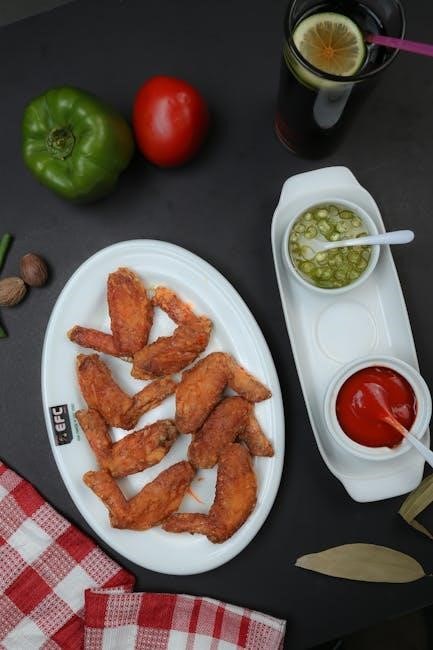
Tyson Frozen Chicken Wings: A Comprehensive Microwave Cooking Guide
This guide details microwave instructions for Tyson frozen wings, offering precise timings for 3, 6, or 9 wings.
Heating times range from 1.5 to 6 minutes on HIGH,
depending on quantity, and appliances may vary.
Understanding Tyson Wing Varieties for Microwave Cooking
Tyson offers diverse frozen wing options, impacting microwave cooking times. Traditional, bone-in wings generally require longer heating compared to wing sections or boneless varieties.
Understanding the specific product code on the packaging is crucial for optimal results, as different cuts and coatings affect heat absorption.
Always refer to the package instructions as a primary guide,
but anticipate slight adjustments based on your microwave’s wattage.
Consistent heating relies on knowing your wing type – fully cooked versus requiring thorough cooking.
Microwave Power Levels and Tyson Wings
Microwave wattage significantly influences Tyson wing cooking times. Most instructions assume a HIGH power level, typically around 1000-1200 watts.
Lower wattage microwaves necessitate extended cooking durations to achieve thorough heating.
If your microwave has adjustable power settings, consider increasing the time proportionally.
For example, at 70% power, increase cooking time by approximately 40-50%.
Regularly check the internal temperature to ensure safety and avoid undercooked portions,
as wattage variations can lead to inconsistent results.
Recommended Microwave-Safe Plates and Covers
Selecting appropriate dishware is crucial for microwaving Tyson wings. Always use microwave-safe plates, preferably glass or ceramic, avoiding metal or those with metallic trims.
A microwave-safe cover, like vented plastic wrap or a silicone lid, is highly recommended.
This prevents splattering and helps retain moisture, promoting more even cooking.
Ensure the cover has vents to release steam, preventing pressure buildup.
Avoid using airtight containers, as they can cause explosions.
A turntable microwave is ideal for even heating, but rotate the plate manually if yours doesn’t have one.
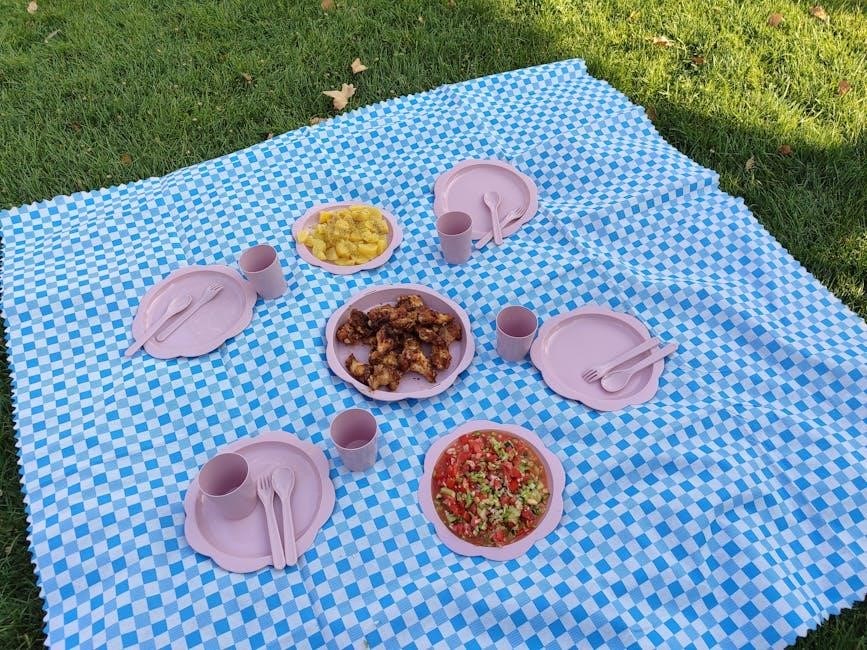
Detailed Microwave Instructions Based on Wing Quantity
Precise cooking times are essential for perfectly heated Tyson wings. This section provides tailored instructions for 3, 6, and 9-piece portions,
ensuring optimal results every time.
Cooking 3 Tyson Wings in the Microwave
For a quick and easy snack, microwave cooking three Tyson frozen wings is remarkably straightforward. Begin by arranging the wings in a circular pattern on a microwave-safe plate, ensuring a small space remains in the center for even heat distribution.
Set your microwave to HIGH power and cook for a duration of 3 to 4 minutes.
Remember that microwave wattages vary, so initial testing may be needed to determine the optimal cooking time for your specific appliance.
After the initial cooking period, carefully check the internal temperature of the wings to ensure they’ve reached a safe level. Rotate the plate halfway through for more even heating.
Cooking 6 Tyson Wings in the Microwave
To prepare a larger portion, cooking six Tyson frozen wings in the microwave requires a slightly adjusted timeframe. Arrange the wings in a circular pattern on a microwave-safe plate, leaving the center open to promote even cooking. Set your microwave to HIGH power and heat for 4 to 5 minutes.
As with any microwave cooking, appliance variations exist, so monitoring is key.
Ensure the wings reach a safe internal temperature after cooking. Rotating the plate during the process will help to eliminate cold spots and ensure consistent heating throughout each wing.
Cooking 9 Tyson Wings in the Microwave
For a more substantial serving, cooking nine Tyson frozen wings simultaneously requires careful attention to microwave timing. Arrange the wings in a circular pattern on a microwave-safe plate, ensuring even spacing for optimal heat distribution. Heat on HIGH for 5 to 6 minutes.
Remember that microwave power levels vary, so initial testing may be needed.
Always verify the internal temperature reaches a safe level. Rotating the plate midway through cooking is crucial for preventing uneven heating and ensuring all wings are thoroughly cooked.

Optimizing Cooking Time for Thorough Heating
Achieving perfectly heated wings requires attention to detail. Check internal temperature to ensure safety, and rotate the plate during cooking to address uneven heating issues.
Checking Internal Temperature for Safety
Ensuring Tyson wings reach a safe internal temperature is crucial for preventing foodborne illness. Use a reliable food thermometer to verify doneness; the USDA recommends cooking chicken to an internal temperature of 165°F (74°C). Insert the thermometer into the thickest part of the wing, avoiding bone contact.
Microwaves can sometimes cook unevenly, so check multiple wings to guarantee consistent heating throughout. If any part of a wing hasn’t reached 165°F, continue microwaving in 30-second intervals, rechecking the temperature after each interval until safe. Prioritize safety and thorough cooking for a delicious and worry-free experience.
Addressing Uneven Cooking Issues
Uneven heating is a common challenge when microwaving Tyson wings. To combat this, arrange wings in a circular pattern on the microwave-safe plate, leaving a space in the center for more even energy distribution.
Frequently rotating the plate midway through the cooking process is essential, ensuring all sides receive adequate microwave exposure. If hot and cold spots persist, separate the wings and microwave them in smaller batches. Consider flipping the wings halfway through for more uniform cooking. Patience and these adjustments will yield consistently heated wings.

Beyond the Microwave: Alternative Cooking Methods
For varied results, Tyson wings can be cooked in convection or conventional ovens. Convection ovens require preheating to 375°F and baking for 8-10 minutes.
Convection Oven Instructions for Tyson Wings
Achieving a crispy texture is easily done using a convection oven. Begin by preheating your convection oven to 375°F (190°C). Once preheated, arrange the frozen Tyson chicken wings in a single layer on a baking sheet. Avoid overcrowding the pan to ensure even cooking and optimal crisping.
Bake for approximately 8 to 10 minutes. It’s crucial to monitor the wings closely during the last few minutes of cooking to prevent burning. Ensure the internal temperature reaches 165°F (74°C) for safe consumption. Convection ovens circulate hot air, resulting in faster and more even cooking compared to traditional ovens, delivering a delightful, crispy finish to your Tyson wings.
Conventional Oven Baking Instructions
For a classic oven-baked experience, preheat your conventional oven to 375°F (190°C). Arrange the frozen Tyson chicken wings in a single layer on a baking sheet, ensuring they aren’t overlapping for even cooking. This prevents steaming and promotes crispiness.
Bake for 8-10 minutes, checking for doneness. Monitor closely during the final minutes to avoid burning. Confirm the internal temperature reaches 165°F (74°C) using a food thermometer. Conventional ovens provide a consistent heat, resulting in thoroughly cooked and flavorful Tyson wings, perfect for sharing or enjoying as a satisfying snack.
Tips for Crispier Wings
Achieve superior crispiness by utilizing a wire rack within the microwave, or thoroughly patting the Tyson wings dry before initiating the cooking process.
Using a Wire Rack in the Microwave
Elevating Tyson frozen wings on a wire rack inside the microwave significantly improves air circulation, promoting more even cooking and, crucially, a crispier texture. The rack allows microwaves to reach all surfaces of the wings, preventing a soggy underside. Ensure the rack is microwave-safe before use, and position it securely above a microwave-safe plate to catch any drips. This method mimics the effect of convection ovens, lifting the wings away from accumulated moisture. Experiment with rack height for optimal results, and remember to rotate the plate during cooking for consistent crispness. This simple technique transforms microwaved wings!
Patting Wings Dry Before Cooking
Before microwaving Tyson frozen chicken wings, gently patting them dry with paper towels is a crucial step often overlooked. This removes surface ice crystals and excess moisture, which hinder browning and crisping. Excess water creates steam, leading to soggy wings instead of a desirable texture. Even seemingly dry frozen wings benefit from this quick preparation. Thoroughly drying the wings allows the microwave energy to directly heat the chicken, promoting more even cooking and a better overall result. It’s a small effort yielding significant improvements in texture and taste!
Common Mistakes to Avoid When Microwaving Tyson Wings
Avoid overcrowding the microwave plate and failing to rotate it during cooking. These errors cause uneven heating, resulting in some wings being undercooked or overdone;
Overcrowding the Plate
A frequent error when microwaving Tyson wings is placing too many on the plate at once. Overcrowding prevents even cooking, as microwaves need space to circulate effectively around the food. When wings are packed tightly, the outer portions often become overcooked and potentially dry, while the inner wings remain frozen or lukewarm.
To mitigate this, cook wings in batches corresponding to the recommended quantities – 3, 6, or 9 – as outlined in the cooking instructions. Ensure each wing has adequate space around it, allowing microwave energy to penetrate and heat thoroughly. Using a larger plate, if available, can also help prevent overcrowding and promote more consistent results.
Not Rotating the Plate During Cooking
A common mistake is failing to rotate the plate while microwaving Tyson wings. Microwaves often have hot spots, meaning they don’t distribute heat uniformly. Without rotation, wings positioned in these hot spots will overcook, becoming tough or rubbery, while those in cooler areas remain undercooked and potentially unsafe to consume.
Regularly rotating the plate – ideally halfway through the cooking time – ensures all sides of the wings are exposed to the microwave energy. This promotes even heating and a more consistent texture throughout. Many microwaves have a rotating turntable, but manual rotation is still beneficial for optimal results.

Understanding Tyson Wing Packaging Instructions
Tyson packaging provides crucial details, including the “Best By” date for peak quality and specific product codes for identification.
Always review these before microwaving!
Decoding the “Best By” Date
The “Best By” date on Tyson frozen chicken wing packaging isn’t an expiration date, but rather an indicator of when the product will maintain its optimal flavor and quality. Wings are generally safe to consume beyond this date, provided they’ve been stored properly in the freezer. However, for the best taste experience, it’s recommended to use the wings before the date indicated.
Consistent freezer temperatures are key to preserving quality. Check for freezer burn, which can affect texture and taste. If the wings are heavily freezer burned, their quality will be diminished, even if still safe to eat. Always prioritize using the oldest packages first to minimize waste and ensure freshness.
Identifying Specific Product Codes
Tyson chicken wing packaging features unique product codes crucial for tracing production details and verifying cooking instructions. These codes, typically found near the “Best By” date, help ensure you’re using the correct heating times. Different wing varieties – like fully cooked or breaded – may require adjusted microwave settings.
Referencing the product code on Tyson’s website or contacting their customer service can provide precise cooking recommendations tailored to your specific package. This is especially helpful for newer or less common product lines. Accurate identification guarantees optimal results and food safety when microwaving Tyson appetizers.

Safety Precautions for Microwave Cooking
Always use caution when handling hot plates and freshly microwaved Tyson wings, as steam burns are possible. Utilize oven mitts for safe removal.
Handling Hot Plates and Wings
Microwaved plates and Tyson wings can become extremely hot, posing a burn risk. Always use oven mitts or pot holders when removing the plate from the microwave. Carefully lift the plate, avoiding direct contact with its surface. When handling the wings themselves, use a fork or tongs to prevent burns to your fingers. Be mindful of escaping steam when opening the microwave or lifting the plate, as this can also cause burns. Allow wings to cool slightly before consuming to avoid discomfort. Prioritize safety to ensure a pleasant cooking experience with Tyson frozen chicken wings.
Avoiding Steam Burns
Microwaving Tyson frozen wings generates significant steam within the enclosed space. Exercise extreme caution when opening the microwave door after cooking; stand to the side to avoid a direct blast of hot steam. Gently lift the plate cover, if used, away from your face to release steam gradually. Be aware that steam can also accumulate under the wings themselves. Allow a brief pause before handling the wings or plate to let the steam dissipate. Protecting yourself from steam burns is crucial for a safe and enjoyable experience when preparing Tyson appetizers.

Troubleshooting Common Problems
If wings remain frozen, continue microwaving in 30-second intervals. For tough wings, ensure proper thawing or consider alternative cooking methods for better results.
Wings Still Frozen After Cooking
Encountering frozen centers after microwaving Tyson wings is not uncommon, primarily due to varying microwave power levels and wing thickness. If this occurs, do not consume the wings immediately. Instead, continue microwaving in 30-second increments, checking for doneness after each interval.
Ensure the wings are arranged in a single layer on a microwave-safe plate, leaving space in the center for more even heating. Rotating the plate midway through cooking is also crucial. Remember that suggested cooking times are approximate and may need adjustment based on your specific microwave’s wattage. Prioritize internal temperature verification for safety.
Wings are Tough or Rubbery
If your Tyson wings emerge from the microwave tough or rubbery, overcooking is the likely culprit. Microwaves can quickly heat and dry out the chicken, leading to this undesirable texture. Reduce cooking time in future attempts, starting with the minimum recommended duration for the wing quantity.
Consider using a lower power level (70% or 50%) and extending the cooking time slightly for more gentle heating. Ensure you’re not exceeding the suggested 5-6 minute range for 9 wings. Checking the internal temperature is vital; remove them when they reach 165°F (74°C).

Nutritional Information for Tyson Wings
Tyson wings vary in nutritional content, but generally offer a high protein snack.
Be mindful of sodium levels and calorie counts when enjoying these convenient appetizers.
Calorie Count and Macronutrient Breakdown
Understanding the nutritional profile of Tyson frozen chicken wings is key for informed snacking. A typical serving (around 3 wings) contains approximately 280-350 calories, depending on the specific variety and preparation method. Macronutrient breakdown reveals roughly 25-30 grams of protein, contributing to satiety and muscle health. Fat content ranges from 15-20 grams, primarily from the skin, while carbohydrate levels are minimal, usually under 5 grams.
These values are estimates, and actual figures can vary. Consider that microwaving doesn’t add extra calories, but breaded or sauced wings will significantly increase the overall count. For precise details, always refer to the specific product’s nutrition facts label.
Sodium Content Considerations
Tyson frozen chicken wings, like many pre-seasoned or marinated products, can be relatively high in sodium. A serving of 3 wings may contain between 600-800 milligrams of sodium, representing a significant portion of the daily recommended intake. This is primarily due to the brining or seasoning processes used to enhance flavor and tenderness.
Individuals monitoring their sodium consumption should be mindful of portion sizes and consider unseasoned varieties if available. Pairing wings with low-sodium sides can help balance the overall meal. Always check the nutrition label for accurate sodium content per serving.